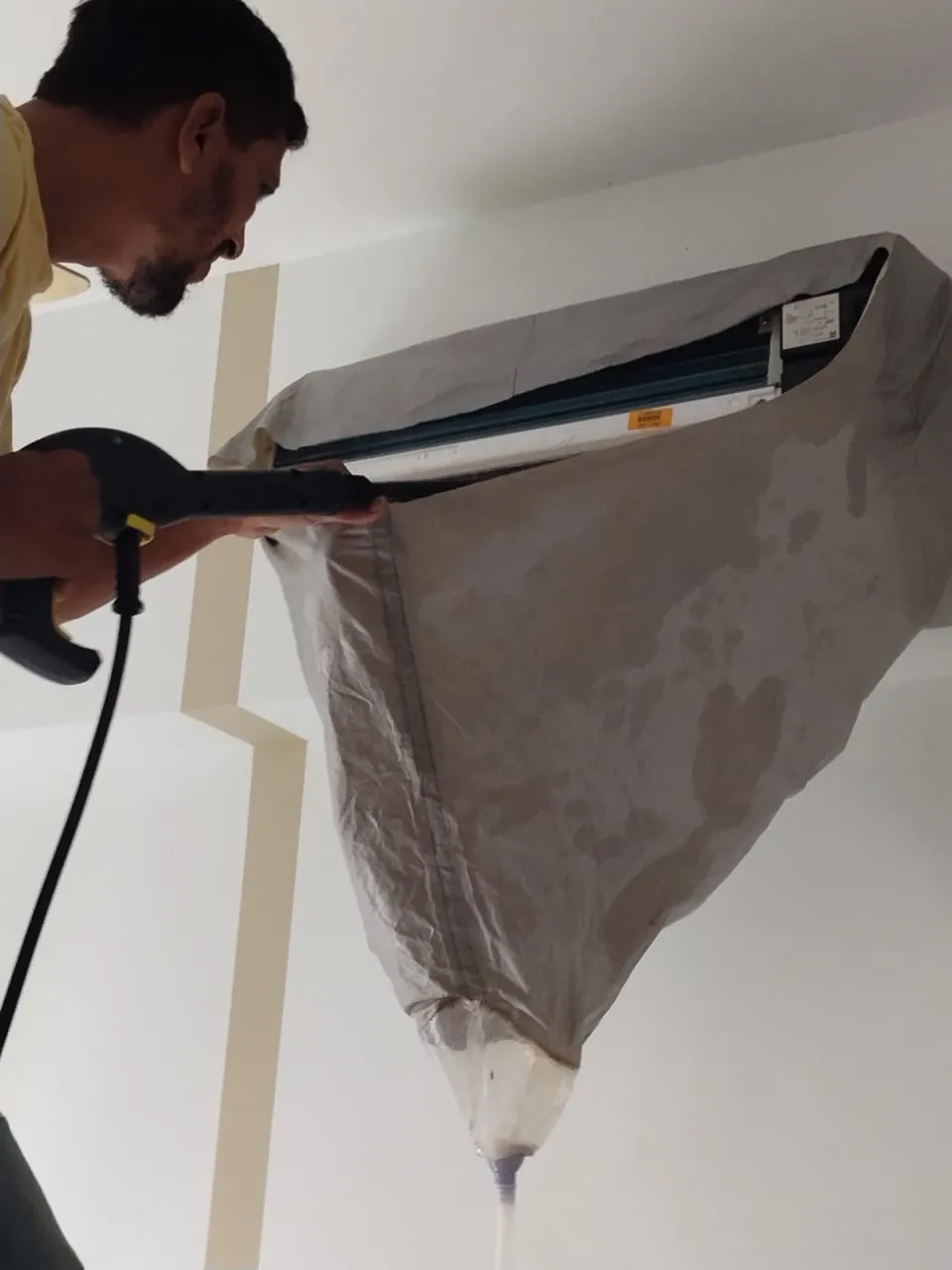
How Often Should You Service Your Aircond in Malaysia?
Malaysia's heat and humidity means your aircond works harder than most. Here's the recommended servicing schedule based on usage type and unit age.
Why Malaysia Needs More Frequent Servicing
Unlike temperate countries where aircond is used seasonally, Malaysian aircond units run year-round — often 8–12 hours per day. Combined with high humidity, dust, and occasional haze, units accumulate dirt faster and need more regular attention.
Recommended Service Schedule
- Light use (evenings only, bedrooms): Service every 6 months
- Moderate use (4–6 hours/day): Service every 4 months
- Heavy use (8+ hours/day, living halls, offices): Service every 3 months
When to Do a Chemical Wash
Regardless of usage, a chemical wash is recommended once every 12 months. If you're near construction, a main road, or in a high-humidity area, every 8–10 months is better.
Signs You've Waited Too Long
- Musty or sour smell from the unit
- Weaker cooling than before
- Visible dust or mould on the vents
- Water dripping from the indoor unit
- Higher electricity bill than usual
What Happens When You Skip Servicing
Skipping regular servicing for 2 or more years in Malaysian conditions causes mould colonies to establish deep inside the blower wheel and drain pan — areas that a basic service cannot clean. The evaporator coil gradually loses 15–40% of its heat exchange capacity as grime builds up on the fin surfaces. Electricity bills rise progressively as the compressor compensates. By the time a homeowner notices significant cooling decline, the unit typically needs a chemical overhaul rather than a simple wash.
Book a Service
Basic servicing from RM 99. Chemical wash from RM 120. WhatsApp +60 18-298 3573 to book. See: Standard Aircond Service
Signs You Are Overdue for Service
These signs indicate your aircond needs immediate attention regardless of when it was last serviced: musty or sour smell during operation, water dripping from the indoor unit, cooling noticeably weaker than 3 months ago, ice visible on the copper pipes or evaporator coil, or the unit cycling on and off more frequently than usual. Any one of these warrants a service call rather than waiting for the next scheduled date.
Getting on a Consistent Schedule
The easiest way to maintain a consistent schedule is to book the next service at the end of each visit. KL Renovator can note your preferred interval and send a WhatsApp reminder when your next service is due. Basic service from RM 99, chemical wash from RM 120. WhatsApp +60 18-298 3573.
How to Remember Your Service Schedule
The simplest approach is to set a recurring WhatsApp reminder on your phone — 3 months for basic service, 12 months for chemical wash. Alternatively, after every KL Renovator visit, our team will note your preferred interval and send a reminder when the next service is approaching. For commercial and office clients, a maintenance contract removes the need to track schedules entirely — everything is handled automatically on pre-agreed dates with priority response for any breakdowns between scheduled visits.
Definitions
Key terms in this guide, explained
Short, plain-language definitions of the terms used above — written by the technicians who do the work, not copied from a manufacturer brochure.
What is the blower wheel, and how does it lose airflow?
The blower wheel is the long barrel-shaped fan behind the indoor coil that pushes cooled air into the room. Each of its blades is a small scoop, and each scoop slowly fills with a felt of damp dust. A loaded wheel moves far less air, whistles, and throws dust specks across the room when it starts.
A torch shone into the air outlet shows the blades: grey fur on the blades means a chemical wash is overdue.
MEPS — what is the scheme, and who runs it?
MEPS is Malaysia's Minimum Energy Performance Standards scheme, administered by the Energy Commission. Air conditioners sold here carry a star label — more stars means less electricity for the same cooling. The label is a comparison tool between models of the same capacity; it says nothing about how your unit performs once the coil is dirty or the room is oversized.
Read the star label together with the annual kWh figure printed on it — that number is what turns into ringgit on your TNB bill.
What is a chemical overhaul, and when is it needed?
A chemical overhaul is the level above a chemical wash: the indoor unit is dismounted, dismantled into casing, blower wheel, drain tray and coil, and each part is soaked and scrubbed separately before reassembly and a leak test. It is the only way to clear a drain tray that has silted up or a blower wheel packed solid with mould. Published price starts at RM 420 for 1.0–1.5 HP.
Ask for an overhaul instead of another wash if the unit still drips or smells within weeks of a chemical wash.
Side-by-side comparison
Servicing every 3 months vs every 6 months: which schedule is right?
Usage hours and air quality set the interval, not a number copied from a manual written for a temperate country.
| What to compare | Every 3 months | Every 6 months |
|---|---|---|
| Daily running hours | 8 hours or more, or 24/7 office use | Occasional, a few hours a week |
| Environment | Roadside, construction dust, pets, smoking | High floor, closed windows, low dust |
| Risk of skipping | Filters choke fast, airflow drops within weeks | Slower, but the coil still loads up |
| Cost over a year | Four basic visits | Two basic visits |
In short: Bedrooms running every night belong on the 3-month rhythm; a rarely used guest room is fine at 6 months with one chemical wash a year.
Quick answer
KL Renovator's practical answer: Malaysia's heat and humidity means your aircond works harder than most. Here's the recommended servicing schedule based on usage type and unit age.
Reviewed by real technicians
KL Renovator's HVAC Expert Team
This article links back to the same field team that services wall-mounted, ceiling cassette and window units across KL & Selangor. Meet the 4 real technicians behind KL Renovator, see their experience, and review our service standards before you book.