Loading…
Loading page
Loading…
Indoor Air Quality & Chemical Wash
What a Dirty Coil Does — and What a Chemical Wash Removes
In a tropical climate the same humidity that makes an aircond essential also turns the inside of a neglected unit into a home for mould and biofilm. This guide explains, plainly and without medical claims, how a dirty evaporator coil and blower wheel affect the air in a closed room — and exactly what a pressure chemical wash physically removes.
This page describes what a dirty aircond physically holds and what cleaning removes. It is not medical advice and makes no health-cure claim. If you have a health concern, please speak to a doctor.
What's really going on inside the unit
An evaporator coil is cold and wet whenever the aircond runs. In KL's humidity that surface, plus the drain pan below it, is an ideal place for mould and a slimy bacterial biofilm to grow. A pressure chemical wash strips that layer off the fins and flushes the drain — ordinary filter-rinsing does not reach it.
The sour or musty smell when an aircond first switches on is air being pushed across a coil and blower wheel coated in that biofilm. It is a symptom of what has grown inside, not of the room itself. Cleaning the coil and blower — not just spraying a fragrance — is what actually removes the source.
Filters trap dust, but once they clog, airflow drops and the fine dust that gets past them settles on the wet coil. Rinsing the filters monthly is a homeowner job; clearing the coil and blower that the filters could not protect is what a service visit is for.
A healthy aircond also removes moisture from the air. When the coil is caked or the drain is blocked, that water can back up instead of draining away, feeding more mould. Running dry mode in very humid weather and keeping the coil clean both help the unit manage moisture the way it should.
Cleaning cadence
There is no single answer — it depends on how the room is used. As a practical guide for KL & Selangor homes and businesses:
| Task | How often |
|---|---|
| Rinse washable filters | Every 2–4 weeks (do it yourself) |
| Basic servicing (home) | Every 3–4 months, from RM 99 per unit |
| Pressure chemical wash | Every 6–12 months, from RM 120 per wall unit |
| Chemical overhaul (deep strip-down) | When smell/biofilm returns fast, from RM 420 |
Real Work · Not Stock Photos
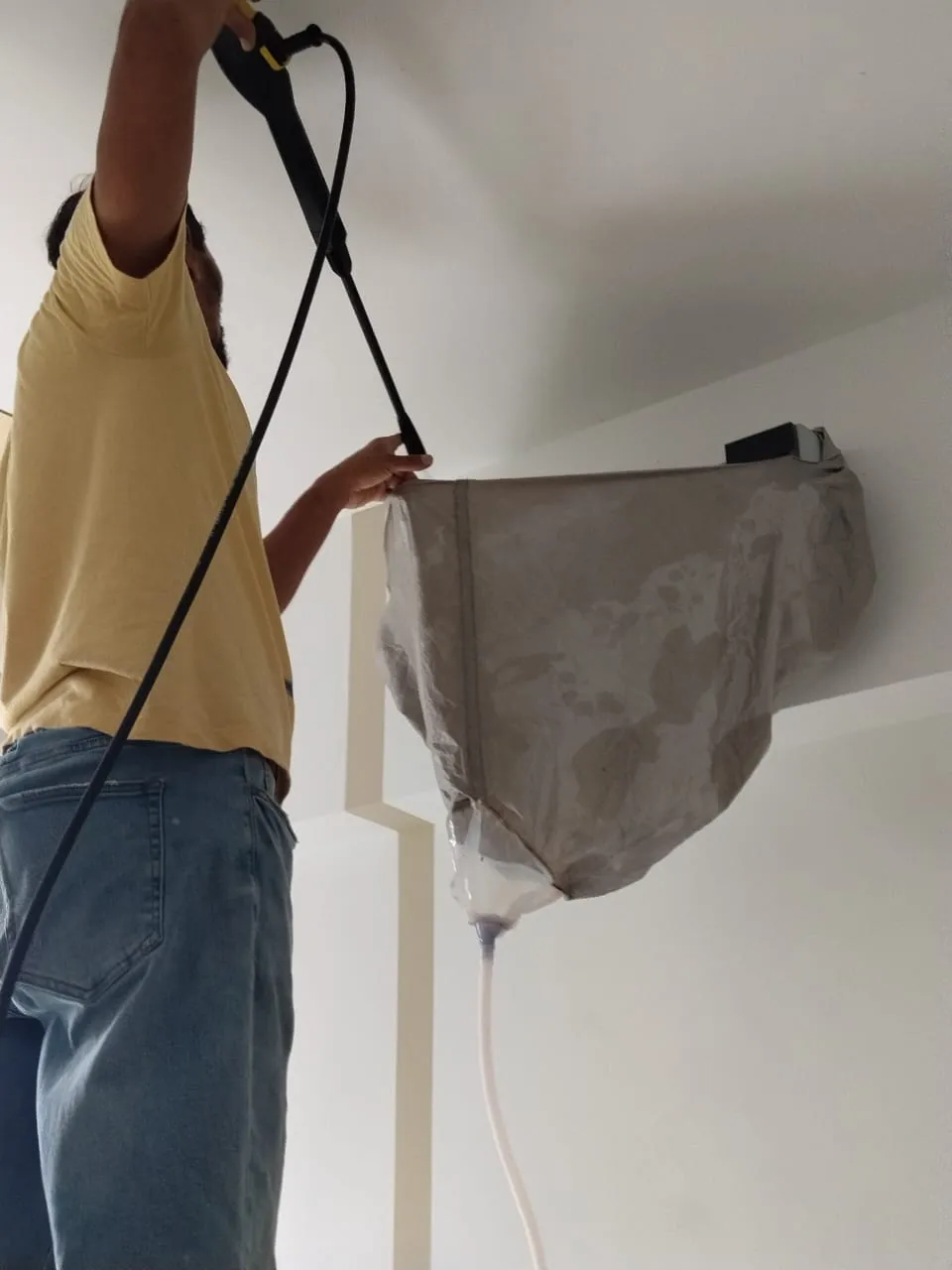
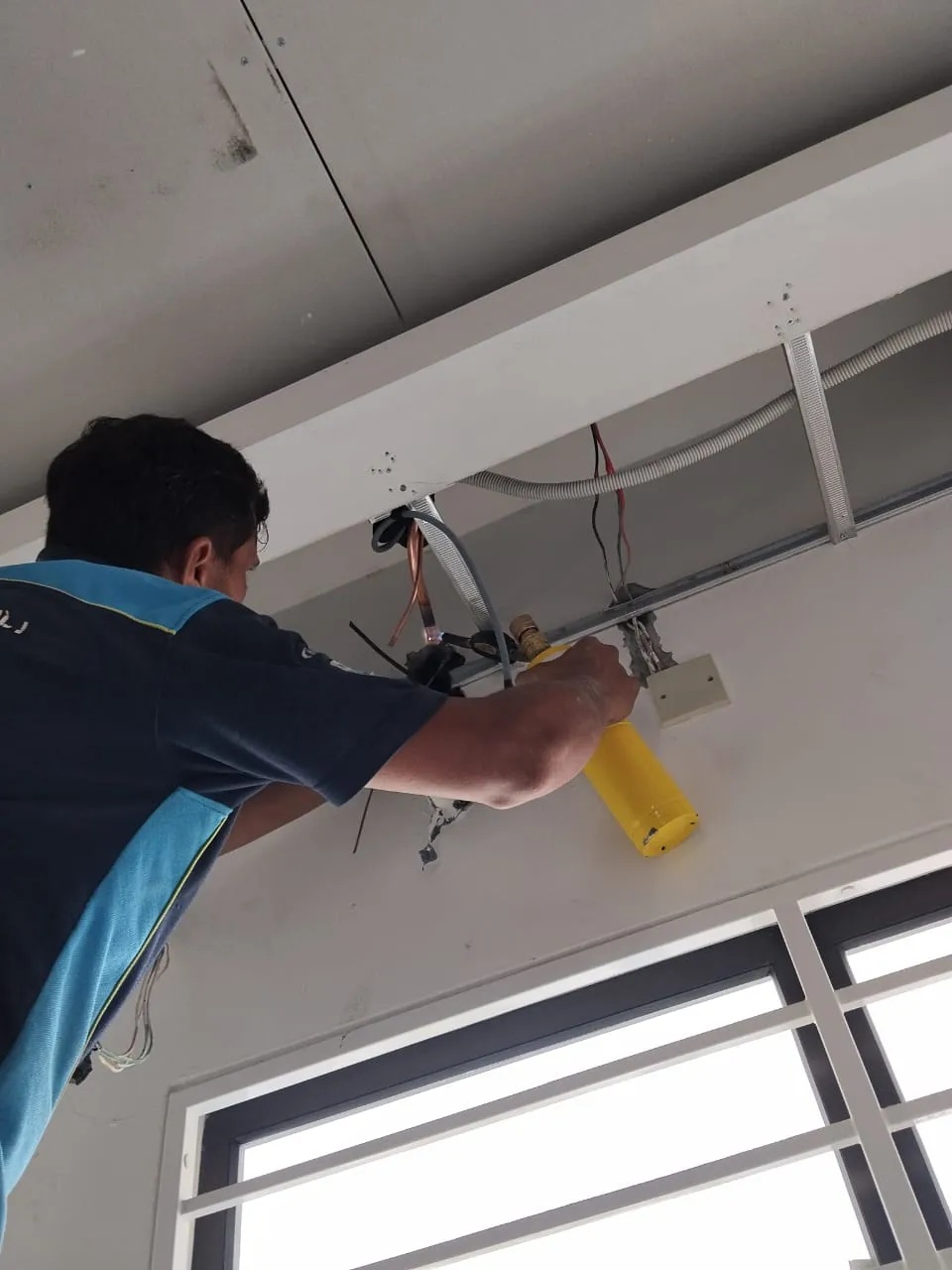
A sample of real KL Renovator work near aircond chemical wash — every photo is our own team on site, not a stock image. Chemical wash, gas top-up, repairs and installation across KL & Selangor.
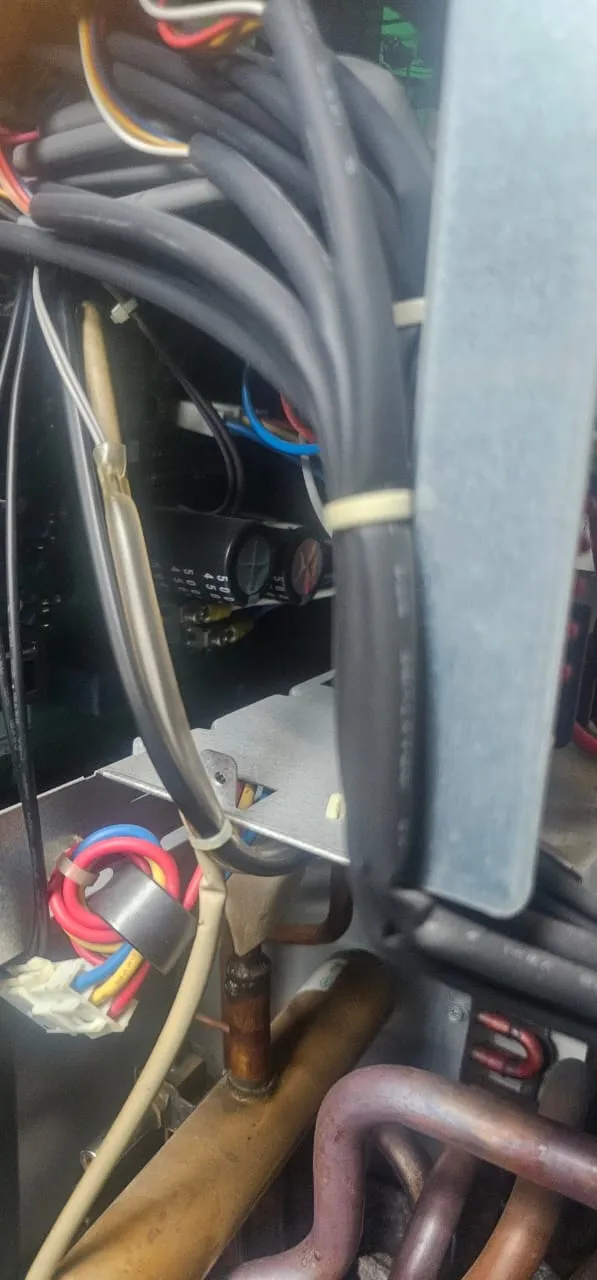
A neglected evaporator coil and blower wheel collect mould, biofilm and dust because they stay cold and wet in KL's humidity. When the fan runs, room air passes over that surface. We describe this as what the unit physically holds and what cleaning removes — we do not make any medical or health-cure claim. If you have a health concern, speak to a doctor.
A pressure chemical wash strips mould, biofilm, grease and embedded dust off the evaporator fins and flushes the drain pan and pipe. It reaches the coil and blower that rinsing the filter cannot. That is why the musty smell on start-up usually disappears after a proper wash rather than after spraying a fragrance.
A chemical wash cleans the coil and drain in place and is enough for most units, from RM 120. If the smell or biofilm returns quickly, a chemical overhaul dismantles the indoor unit for a deep strip-down and clean, from RM 420. We advise which one you actually need after inspecting the unit — we do not upsell the overhaul by default.
Rinse washable filters yourself every 2–4 weeks. Book a basic service every 3–4 months (from RM 99 per unit) and a pressure chemical wash every 6–12 months (from RM 120 per wall unit). Kitchens and rooms used heavily need the shorter end of each range.
Dry mode makes the unit prioritise removing moisture over cooling, which can help in very humid weather. It is not a substitute for cleaning, though — if the coil is caked or the drain is blocked, water backs up and feeds more mould. Dry mode plus a clean coil and clear drain is what actually keeps humidity in check.
Yes. A pressure chemical wash includes flushing the drain pan and pipe, which is where standing water and biofilm collect and where a musty smell and water leaks both start. A blocked drain is one of the most common causes of both odour and an indoor unit dripping water.
Sources we reference
Related pages
Last reviewed: 21 August 2026
Clear the mould, biofilm and dust off the coil and blower, and flush the drain. Chemical wash from RM 120 per wall unit — WhatsApp us your unit type and area.
Definitions
Short, plain-language definitions of the terms used above — written by the technicians who do the work, not copied from a manufacturer brochure.
A pressure chemical wash is a deep clean done with the indoor unit still on the wall. The technician sheets the wall and floor, sprays a coil-safe chemical onto the evaporator fins and blower wheel, then flushes everything out with a pressurised water jet into a catch bag. It removes the mould film and dust mat that ordinary filter washing cannot reach. Published price starts at RM 120 for a 1.0–1.5 HP wall unit.
Most Klang Valley homes need one every 10–12 months; every 6 months if the unit runs overnight or the room faces a construction site.
The evaporator is the finned coil inside the indoor unit where cold refrigerant absorbs heat and moisture from the room air. Because it is permanently wet during operation, it is where mould, bacteria and dust bind together into the grey film that causes the sour smell and the drop in airflow. Filters catch the coarse dust; the coil holds the rest.
If the airflow feels weak right after a filter wash, the coil — not the filter — is the blockage, and that needs a chemical wash.
The blower wheel is the long barrel-shaped fan behind the indoor coil that pushes cooled air into the room. Each of its blades is a small scoop, and each scoop slowly fills with a felt of damp dust. A loaded wheel moves far less air, whistles, and throws dust specks across the room when it starts.
A torch shone into the air outlet shows the blades: grey fur on the blades means a chemical wash is overdue.
Side-by-side comparison
Same chemicals, different depth. The dividing line is whether the indoor unit comes off the wall.
| What to compare | Chemical wash (on the wall) | Chemical overhaul (dismantled) |
|---|---|---|
| Unit removed from wall | No | Yes, dismantled into parts |
| Drain tray and casing | Flushed in place | Soaked and scrubbed separately |
| Typical trigger | Annual maintenance, mild smell | Recurring leak, heavy mould, years without service |
| Published price (1.0–1.5 HP) | RM 120 | RM 420 |
In short: If a wash was done recently and the symptom returned, paying for a second wash is throwing money at the wrong depth — go to overhaul.