High TNB Bill? Check Your Aircond Efficiency | Malaysia 2026 Guide
Is your monthly TNB electricity bill suddenly higher? Your aircond could be the culprit. Learn how dirty coils, low refrigerant, and inefficient settings can increase aircond energy consumption by 15-35% in Malaysian homes.
Your Aircond Is Probably the Reason Your TNB Bill Is High
If you have noticed your monthly electricity bill from TNB (Tenaga Nasional Berhad) increasing despite not changing your usage habits, your aircond unit is almost certainly the cause. In a typical Malaysian 3-bedroom terrace home, a single aircond unit running 8 hours per night can account for 50–70% of the total electricity bill.
The good news: most of the energy efficiency loss from aircond is recoverable through regular professional servicing. In this 2026 guide, we explain exactly how aircond inefficiency translates into higher TNB bills and what you can do about it.
How Dirty Aircond Increases Your Electricity Bill
| Aircond Condition | Energy Impact | Monthly Bill Impact (Single Unit) |
|---|---|---|
| Clean, well-maintained unit | Baseline efficiency (100%) | RM80–RM120/month (8 hrs/day) |
| Dirty evaporator coil (common) | 15–25% efficiency loss | RM 100–200/month |
| Dirty condenser (outdoor unit) | 10–20% additional efficiency loss | RM110–RM160/month |
| Low refrigerant (gas leak) | 20–35% efficiency loss | RM120–RM180/month |
| All three combined (poorly maintained) | 40–50% efficiency loss | RM140–RM220/month |
The Science: Why Dirty Coils Make Your Aircond Work Harder
Your aircond's evaporator coil (indoor unit) is responsible for absorbing heat from your room. When the coil surface is covered in dust, mould, and debris:
- Heat transfer efficiency drops dramatically — the coil cannot absorb as much heat per minute
- The compressor works longer and harder to achieve the same temperature setpoint
- Energy consumption increases proportionally to the compressor workload
- The unit takes longer to cool the room, running at full power for more hours
Similarly, a dirty condenser coil (outdoor unit) cannot release heat efficiently into the ambient air, forcing the compressor to work against higher condensing temperatures — dramatically increasing power draw.
Low Refrigerant: The Silent Efficiency Killer
A slow refrigerant (gas) leak is one of the most common and costly efficiency problems in Malaysian aircond units. Malaysian HVAC experts report that over 60% of aircond units over 3 years old have some degree of refrigerant undercharge due to micro-leaks at flare connections.
When refrigerant is low:
- The evaporator coil temperature rises (less cooling capacity)
- The compressor runs continuously without reaching the thermostat setpoint
- Power consumption stays near maximum while cooling remains inadequate
- Compressor lifespan shortens significantly — leading to expensive replacement
5 Settings That Also Waste Electricity
Beyond maintenance, these common usage habits also unnecessarily increase your TNB bill:
- Setting temperature to 18°C — Most Malaysian homes are comfortable at 24–26°C. Each degree cooler adds 3–5% to energy use.
- Running aircond in a closed room with open doors — Cooled air escapes to other rooms, making the unit work harder.
- Not using the timer or sleep mode — Running at full power through the entire night wastes energy when you are asleep.
- Running multiple units simultaneously at full blast — Using a smaller unit for the bedroom you are in, instead of cooling the whole house, saves significant energy.
- Not cleaning the filter monthly — A clogged filter restricts airflow, reducing cooling efficiency by up to 10%.
The RM99 Investment That Saves RM50–100/Month
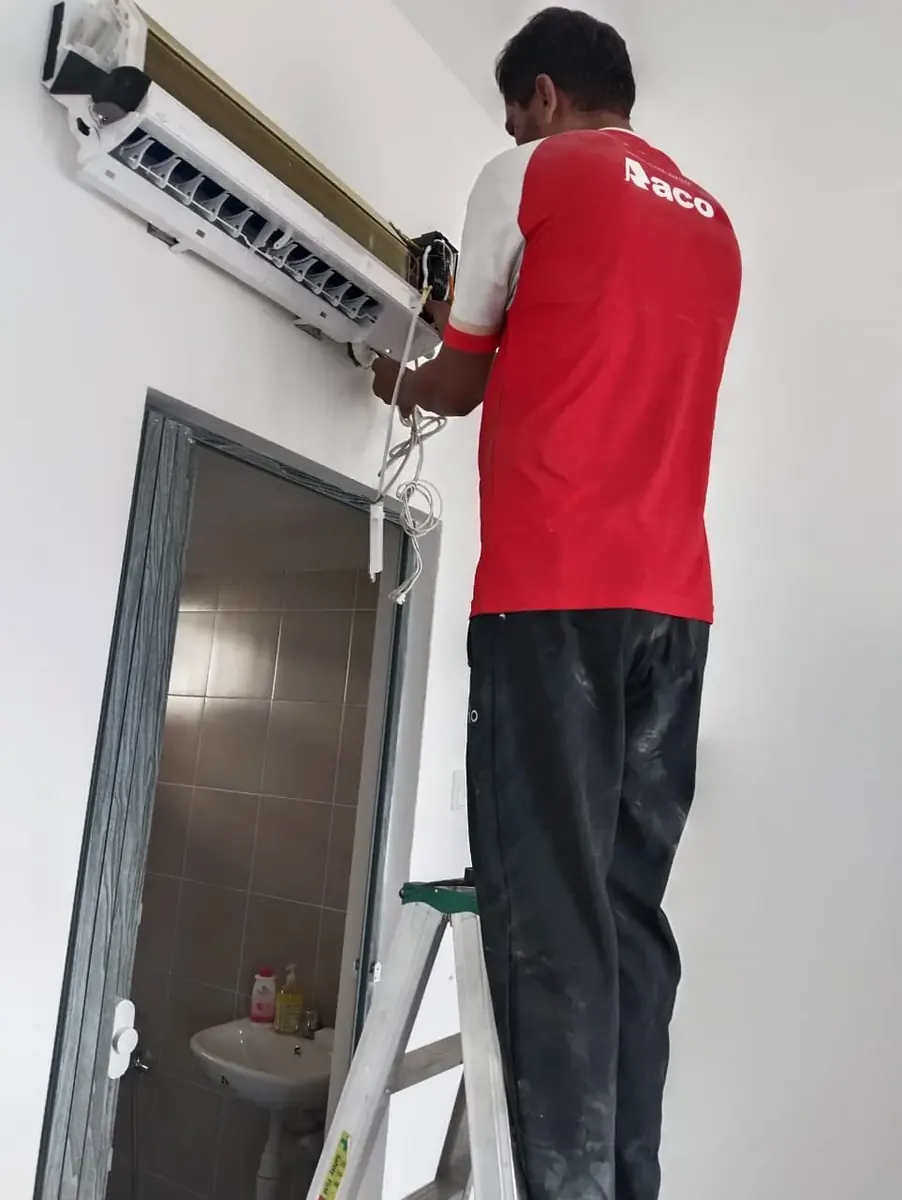
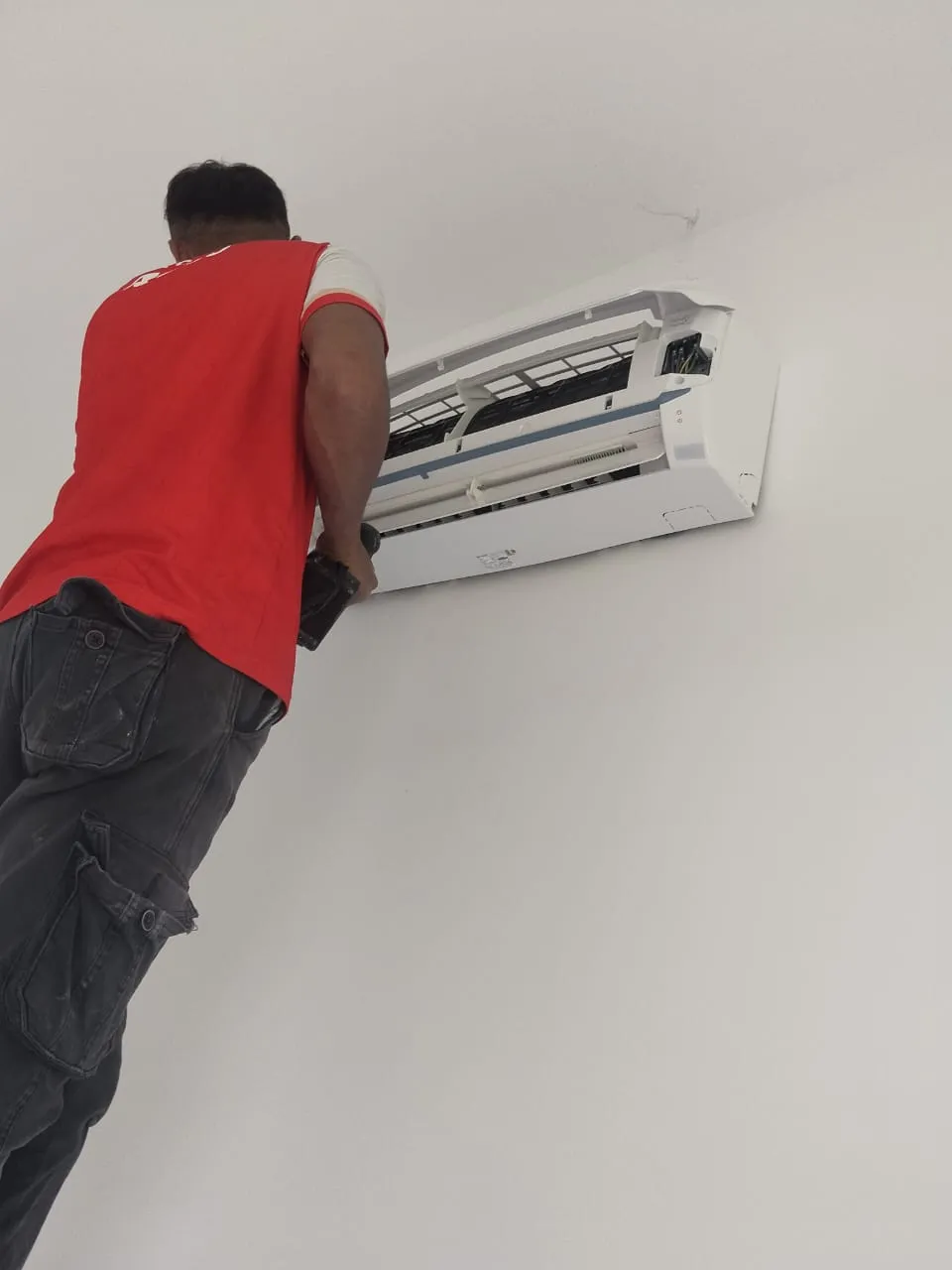
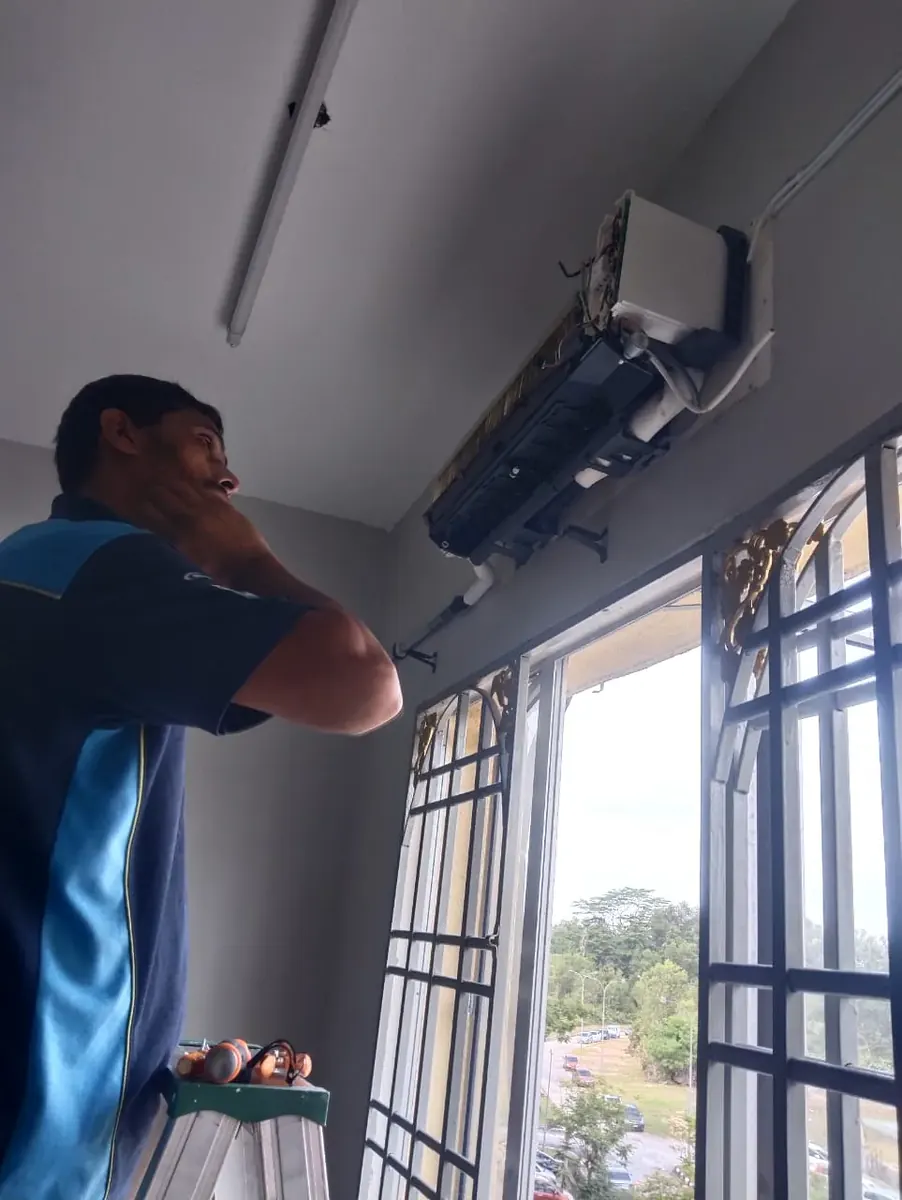
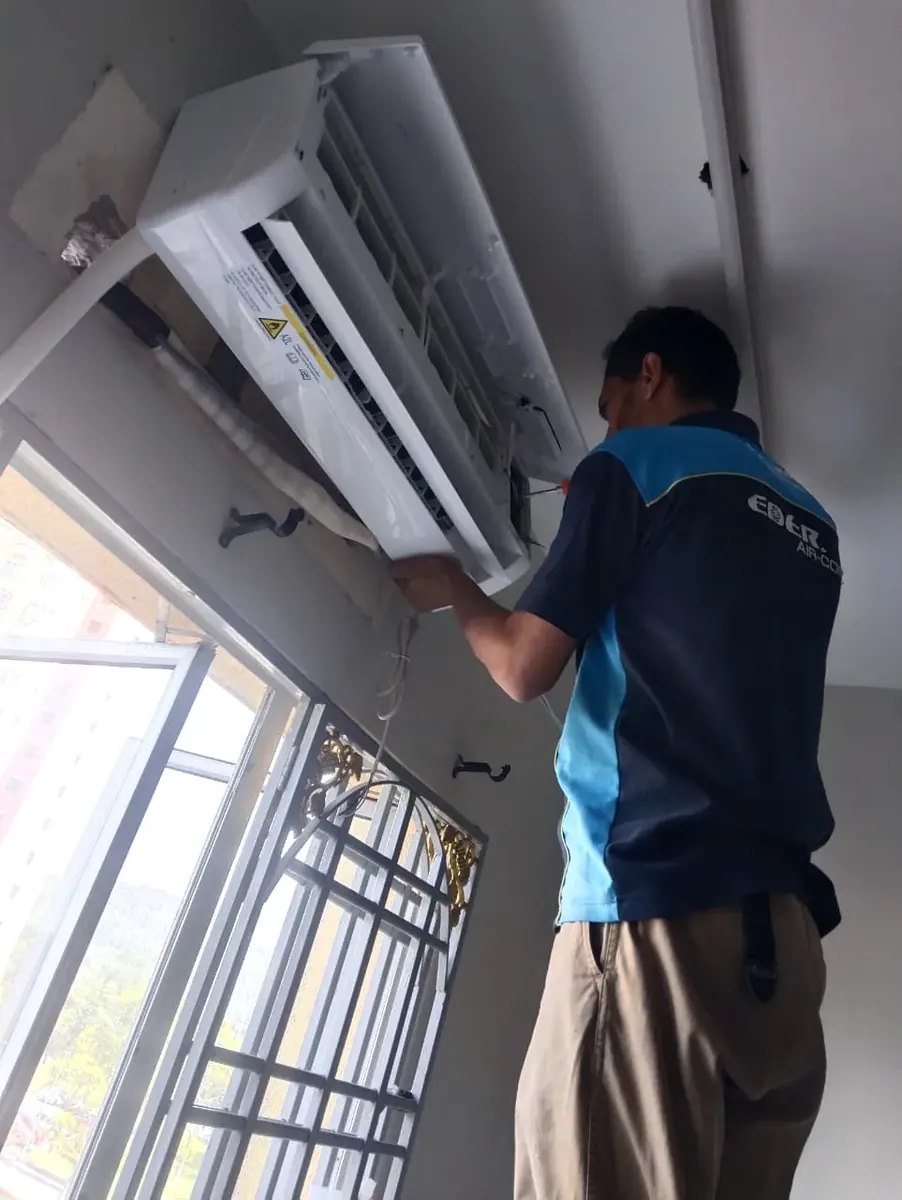
A standard aircond service from KL Renovator costs just RM99 and addresses the root causes of energy inefficiency:
- Full evaporator coil cleaning (restores heat absorption)
- Condenser coil cleaning (restores heat rejection)
- Gas pressure visual check (identifies undercharge early)
- Filter deep clean and reinstallation
- Blower wheel cleaning (restores airflow volume)
If your unit has a refrigerant leak, a gas top-up (from RM 3.00/PSI) or repair will restore full efficiency and pay for itself in 2–3 months through lower TNB bills.
Book Your Energy Efficiency Service Today
Stop paying for wasted electricity. A clean, well-serviced aircond runs at peak efficiency and costs less to operate every month.
WhatsApp KL Renovator at +60 18-298 3573. Basic Servicing | Refrigerant Top-Up | Aircond Chemical Cleaning
Definitions
Key terms in this guide, explained
Short, plain-language definitions of the terms used above — written by the technicians who do the work, not copied from a manufacturer brochure.
What are the torque rules for a copper flare?
A flare joint is the cone-shaped end formed on soft copper tubing so it can seal metal-to-metal against the unit's service valve under a flare nut. The cone must be cut square, deburred and torqued to spec. Over-tightening cracks it, under-tightening leaks slowly — which is why most refrigerant loss on a young system is found at a flare, not in the coil.
A soap-bubble test on every flare after commissioning takes two minutes and catches the leak before it costs you a top-up.
Outdoor condenser — what is it rejecting, and what blocks it?
The outdoor unit holds the compressor, the condenser coil and the fan that blows heat away from the coil. It can only reject heat if air moves freely through the fins, so a coil packed with dust, a unit boxed into a tight service yard, or a hot wall right behind it all raise running pressure and electricity use.
Leave at least 30 cm of clear air behind the condenser and never enclose it in a sealed cabinet or grille box.
MEPS — what is the scheme, and who runs it?
MEPS is Malaysia's Minimum Energy Performance Standards scheme, administered by the Energy Commission. Air conditioners sold here carry a star label — more stars means less electricity for the same cooling. The label is a comparison tool between models of the same capacity; it says nothing about how your unit performs once the coil is dirty or the room is oversized.
Read the star label together with the annual kWh figure printed on it — that number is what turns into ringgit on your TNB bill.
Side-by-side comparison
One unit at a time vs all units in a single visit: which works out better?
Travel and setup are fixed costs on every visit, so batching units changes both the price and the day's schedule.
| What to compare | One unit per visit | All units in one visit |
|---|---|---|
| Cost per unit | Full published rate | Volume discount applies from 5 units |
| Time you need to be home | Repeated short visits | One longer block |
| Consistency of results | Different technicians on different days | Same team, same standard across the house |
| Best for | One unit with an urgent fault | Annual maintenance or a move-in |
In short: Fix the broken unit today if it is urgent, but put the rest of the house on one scheduled visit — the saving comes from the trip, not from cutting the work.
Quick answer
KL Renovator's practical answer: Is your monthly TNB electricity bill suddenly higher? Your aircond could be the culprit. Learn how dirty coils, low refrigerant, and inefficient settings can increase aircond energy consumption by 15-35% in Malaysian homes.
Reviewed by real technicians
KL Renovator's HVAC Expert Team
This article links back to the same field team that services wall-mounted, ceiling cassette and window units across KL & Selangor. Meet the 4 real technicians behind KL Renovator, see their experience, and review our service standards before you book.